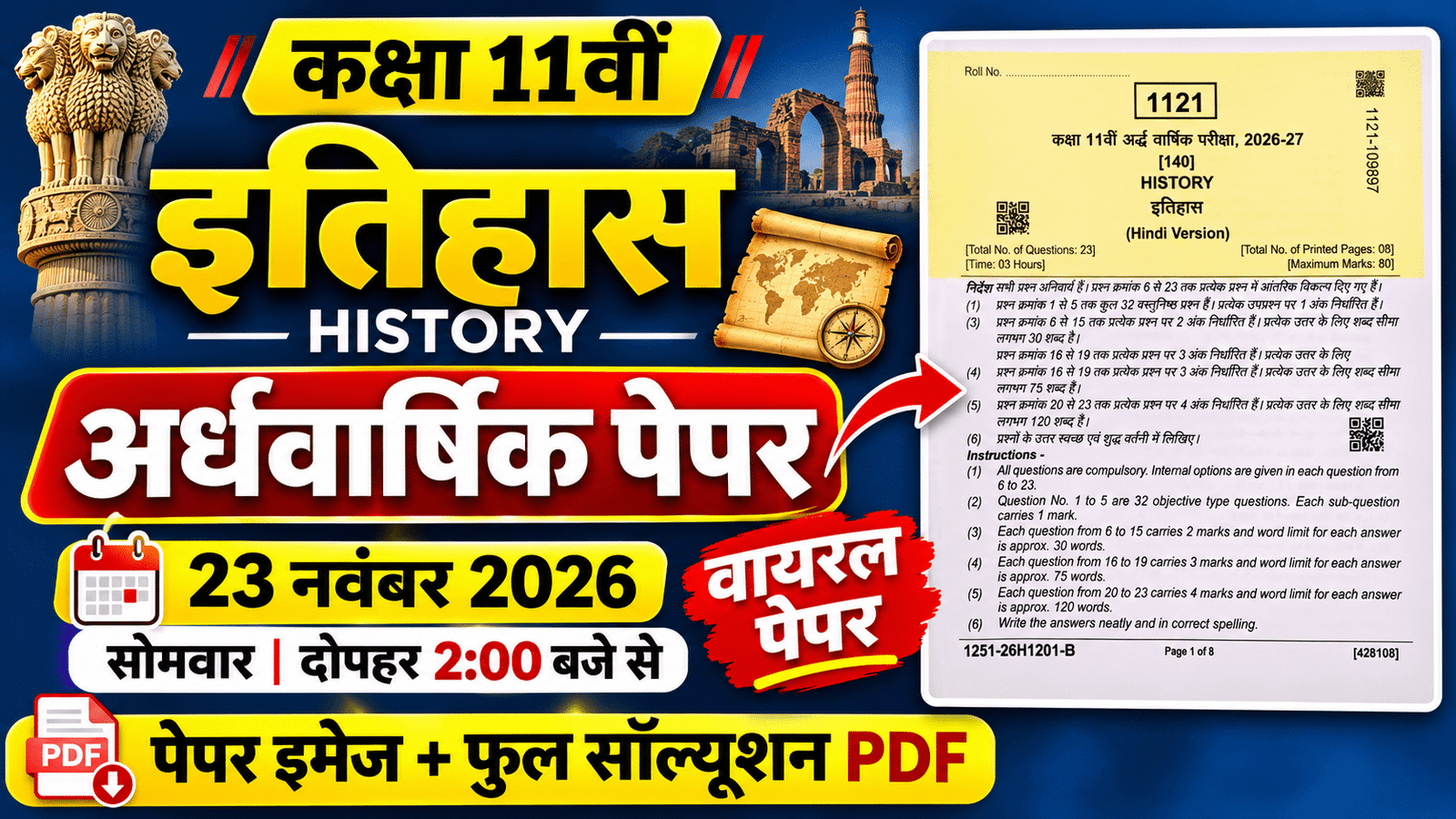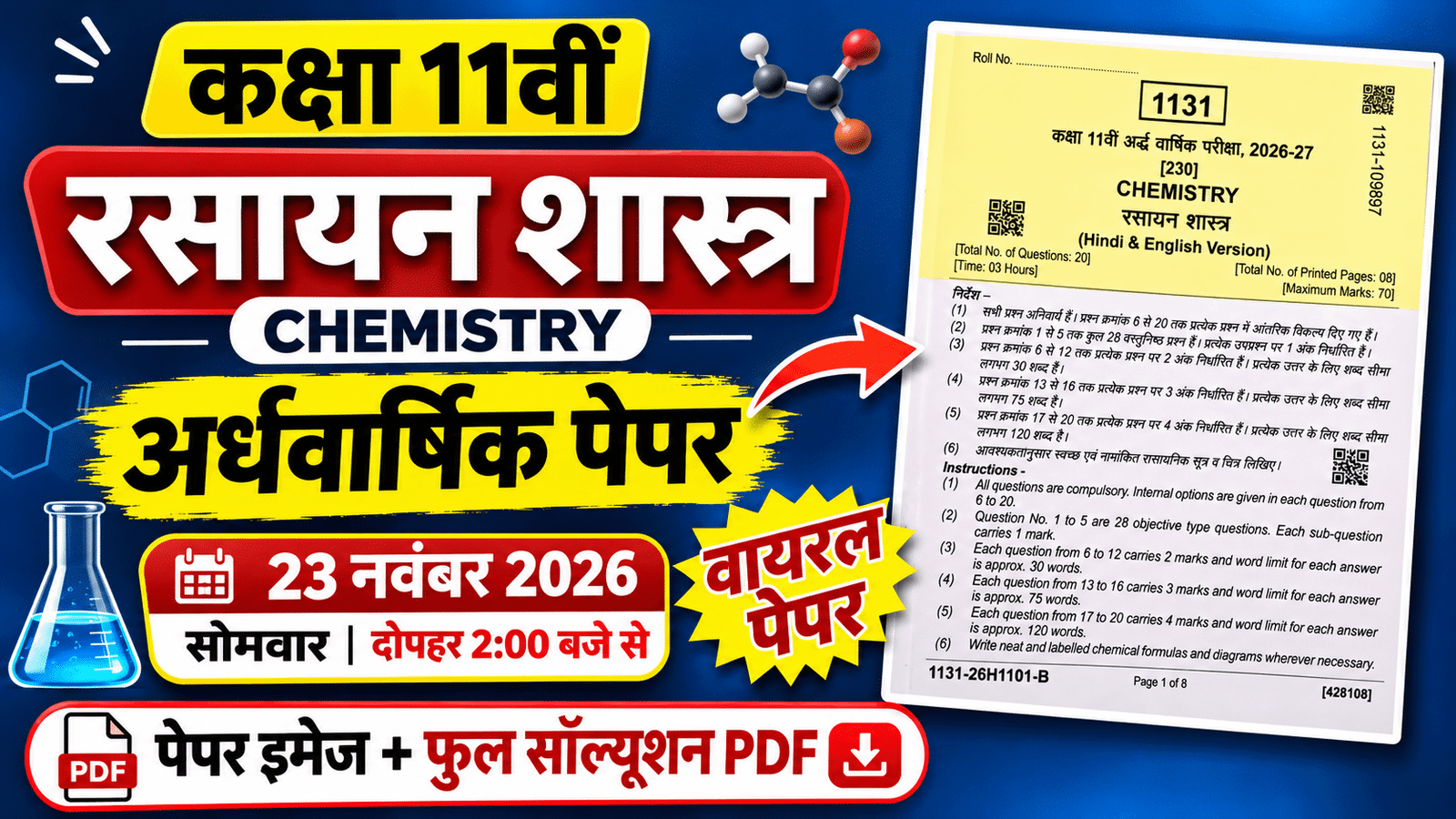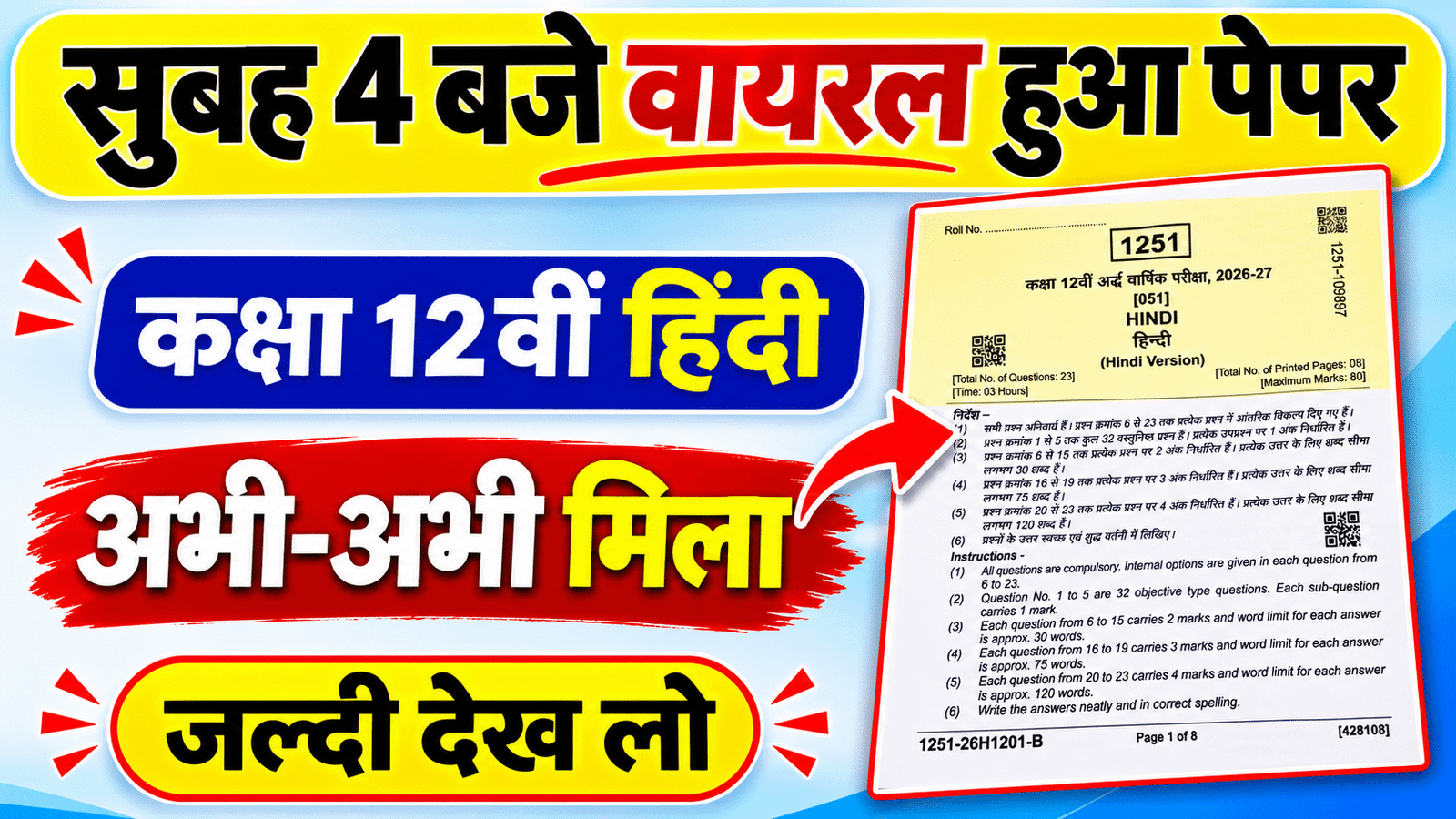

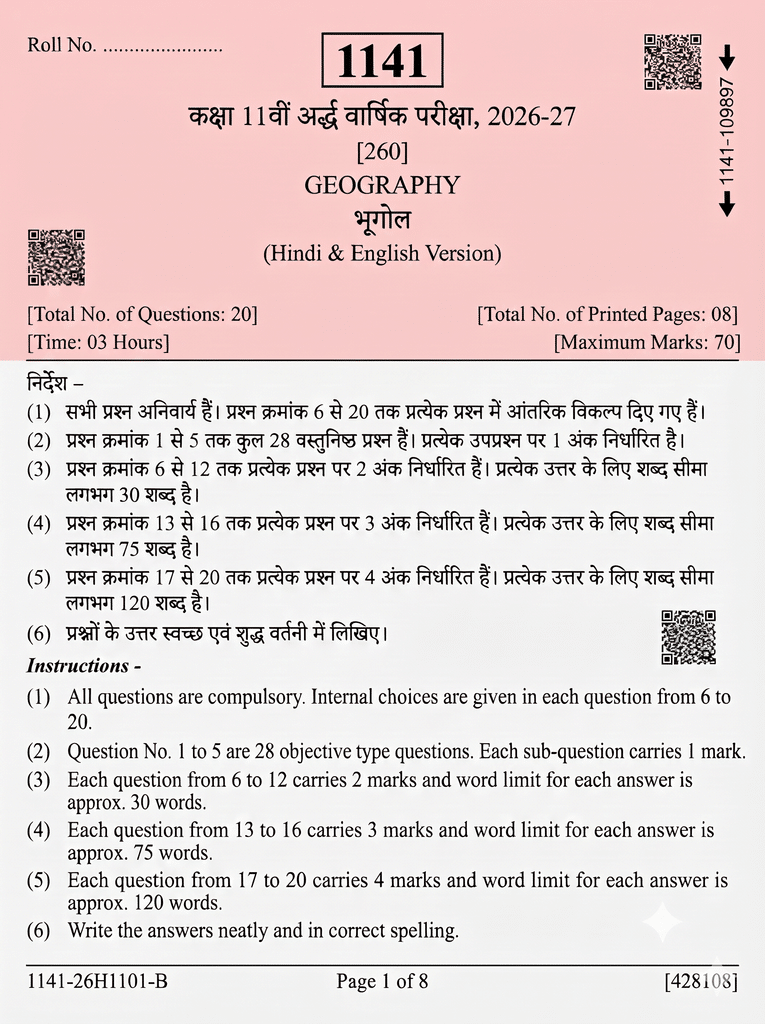
Class 11 Geography Half Yearly Paper 2026-27: कक्षा 11वीं के विद्यार्थियों का आज 27 नवंबर 2026 को दोपहर 2 बजे से भूगोल का अर्धवार्षिक पेपर होने वाला है। यदि आप भी कक्षा 11वीं भूगोल अर्धवार्षिक पेपर 2026-27 की तैयारी कर रहे हैं, तो इस पोस्ट में आपको भूगोल के महत्वपूर्ण प्रश्न, पेपर का पैटर्न और उनके समाधान नीचे देखने को मिलेंगे। परीक्षा से पहले इन्हें जरूर पढ़ें।
(i) निम्नलिखित में से कौन-सा मानव भूगोल का उपागम (Approach) नहीं है? / Which of the following is not an approach of human geography?
(अ) क्षेत्रीय विभिन्नता / Areal differentiation (ब) स्थानिक संगठन / Spatial organization (स) मात्रात्मक क्रांति / Quantitative revolution (द) व्यवहारवादी उपागम / Behavioural approach
(ii) मानव विकास सूचकांक (HDI) में प्रथम स्थान पर स्थित प्रमुख देशों में से एक है – / One of the top-ranked countries in Human Development Index is:
(अ) नॉर्वे / Norway (ब) भारत / India (स) बांग्लादेश / Bangladesh (द) नेपाल / Nepal
(iii) पशुपालन एवं कृषि कार्य एक साथ करना कहलाता है – / Combining crop cultivation and animal rearing together is called:
(अ) गहन निर्वाह कृषि / Intensive subsistence farming (ब) मिश्रित कृषि / Mixed farming (स) वाणिज्यिक अनाज कृषि / Commercial grain farming (द) स्थानांतरित कृषि / Shifting cultivation
(iv) जनगणना 2011 के अनुसार भारत का जनसंख्या घनत्व है – / According to 2011 Census, population density of India is:
(अ) 324 व्यक्ति प्रति वर्ग किमी (ब) 382 व्यक्ति प्रति वर्ग किमी (स) 412 व्यक्ति प्रति वर्ग किमी (द) 298 व्यक्ति प्रति वर्ग किमी
(v) पश्चिम बंगाल में किसान चावल की कौन-सी फसलें उगाते हैं? / Which crops of rice do farmers grow in West Bengal?
(अ) ऑस, अमन और बोरो (ब) रबी, खरीफ और जायद (स) बासमती और सोना (द) केवल खरीफ चावल
(vi) ‘गद्दी’ (Gaddi) जनजाति मुख्यतः किस राज्य में निवास करती है? / ‘Gaddi’ tribe mainly resides in which state?
(अ) राजस्थान / Rajasthan (ब) हिमाचल प्रदेश / Himachal Pradesh (स) ओडिशा / Odisha (द) छत्तीसगढ़ / Chhattisgarh
(i) आदिम समाज भौतिक पर्यावरण को ……………………. कारक के रूप में धारण करता है। / Primitive society perceives physical environment as a ……………………. force.
(ii) आर्थिक स्तर की दृष्टि से भारत की जनसंख्या को मुख्यतः ……………………. वर्गों में बाँटा गया है। / Economically, India’s population is mainly classified into ……………………. groups.
(iii) भोजन एकत्र करना, आखेट, वन काटना तथा पशुचारण ……………………. क्रियाकलाप के अंतर्गत आते हैं। / Gathering, hunting, lumbering and grazing come under ……………………. activities.
(iv) प्रत्येक सड़क या मार्ग जो दो नोड (Nodes) को जोड़ता है, उसे ……………………. कहते हैं। / Every link that joins two nodes is called a ……………………. .
(v) ‘बिग इंच’ (Big Inch) पाइपलाइन के द्वारा मुख्यतः ……………………. का परिवहन किया जाता है। / ‘Big Inch’ pipeline mainly transports ……………………. .
(vi) इंग्लैंड में स्थित यूरो टनल मार्ग लंदन को ……………………. से जोड़ता है। / Euro Tunnel connects London with ……………………. .
| स्तंभ ‘अ’ (Column A) | स्तंभ ‘ब’ (Column B) |
|---|---|
| (1) सर्वाधिक जनसंख्या वाला देश | (क) तृतीयक क्रियाकलाप |
| (2) परिवहन | (ख) चीन |
| (3) प्रेयरी घास के मैदान | (ग) द्वितीयक क्रियाकलाप |
| (4) लक्ष्य क्षेत्र कार्यक्रम | (घ) उत्तरी अमेरिका |
| (5) विनिर्माण उद्योग | (ङ) पर्वतीय क्षेत्र विकास कार्यक्रम |
(नोट: ब्लूप्रिंट के अनुसार प्र. 1–5 में कुल 28 वस्तुनिष्ठ अंक निर्धारित हैं)
(i) भूगोल के अध्ययन में प्रकृति और मानव के बीच अंतर्संबंध का अध्ययन किया जाता है। / Geography studies the interrelationship between nature and human beings.
(ii) संभाव्यवाद की विचारधारा के अनुसार मनुष्य अपने पर्यावरण में परिवर्तन करने में पूर्णतः असमर्थ है। / According to possibilism, human beings are completely unable to modify their environment.
(iii) भारत में उपलब्ध जल संसाधनों का तेजी से निम्नीकरण हो रहा है। / Water resources in India are degrading rapidly.
(iv) ओडिशा भारत में बॉक्साइट का प्रमुख उत्पादक राज्य है। / Odisha is a leading producer of bauxite in India.
(v) भारत में अधिकांश गोंडवाना कोयला क्षेत्र नर्मदा नदी घाटी में स्थित हैं। / Most Gondwana coal fields in India are located in the Narmada river valley.
(vi) इंदिरा गांधी नहर (राजस्थान नहर) पंजाब के हरिके बाँध से निकलती है। / Indira Gandhi Canal originates from Harike barrage in Punjab.
(i) अफ्रीका के शीतोष्ण घास के मैदान क्या कहलाते हैं? / What are the temperate grasslands of Africa called?
(ii) भारत में जनसंख्या की ऋणात्मक वृद्धि दर किस दशक में दर्ज की गई थी? / In which decade was negative population growth rate recorded in India?
(iii) भिलाई किस प्रकार का नगर है? / What type of town is Bhilai?
(iv) भारत में कपास का सबसे बड़ा उत्पादक राज्य कौन-सा है? / Which state is the largest producer of cotton in India?
(v) विश्व में चावल उत्पादन में भारत का कौन-सा स्थान है? / What is India’s rank in rice production in the world?
अथवा / OR
पर्यावरण निश्चयवाद एवं संभाव्यवाद में कोई दो अंतर लिखिए। / Write any two differences between environmental determinism and possibilism.
अथवा / OR
जनसंख्या घनत्व से क्या आशय है? इसे ज्ञात करने का सूत्र लिखिए। / What is meant by population density? Write formula to calculate it.
अथवा / OR
निर्वाह कृषि एवं वाणिज्यिक कृषि में कोई दो अंतर लिखिए। / Write any two differences between subsistence agriculture and commercial agriculture.
अथवा / OR
आधारभूत उद्योग किसे कहते हैं? एक उदाहरण दीजिए। / What is a basic industry? Give one example.
अथवा / OR
परिवहन एवं संचार सेवाओं के महत्व पर दो बिंदु लिखिए। / Write two points on importance of transport and communication services.
अथवा / OR
खनिज संसाधनों के संरक्षण की आवश्यकता क्यों है? दो कारण लिखिए। / Why is conservation of mineral resources necessary? Write two reasons.
अथवा / OR
सलेम या भिलाई इस्पात संयंत्र की अवस्थिति का कोई एक कारण लिखिए। / Write any one locational factor of Bhilai steel plant.
अथवा / OR
मानव विकास के चार प्रमुख स्तंभ (समता, सततपोषणीयता, उत्पादकता, सशक्तिकरण) कौन-से हैं? स्पष्ट कीजिए। / What are the four pillars of human development? Explain.
अथवा / OR
नगरीय बस्ती एवं ग्रामीण बस्ती में कोई तीन अंतर स्पष्ट कीजिए। / Distinguish between urban settlement and rural settlement (any three points).
अथवा / OR
भारत में परंपरागत एवं गैर-परंपरागत ऊर्जा संसाधनों में कोई तीन अंतर लिखिए। / Write any three differences between conventional and non-conventional energy resources in India.
अथवा / OR
पर्वतीय क्षेत्र विकास कार्यक्रम के कोई तीन उद्देश्य लिखिए। / Write any three objectives of Hill Area Development Programme.
अथवा / OR
जनसांख्यिकीय संक्रमण सिद्धांत की विभिन्न अवस्थाओं को स्पष्ट कीजिए। / Explain different stages of demographic transition theory.
अथवा / OR
विश्व में परिवहन के प्रमुख साधनों (सड़क, रेल, जल एवं वायु परिवहन) के गुण व महत्व का वर्णन कीजिए। / Describe merits and importance of major modes of transport in the world.
अथवा / OR
भारत में सिंचाई की आवश्यकता एवं जल संसाधन प्रबंधन के उपायों का विस्तार से वर्णन कीजिए। / Describe need for irrigation and measures for water resource management in India in detail.
(i) कपास उत्पादक प्रमुख क्षेत्र (गुजरात/महाराष्ट्र) (ii) कोयला क्षेत्र (झरिया/रानीगंज) (iii) भिलाई लौह-इस्पात केंद्र (iv) इंदिरा गांधी नहर
अथवा / OR
भारत के रेखा मानचित्र में निम्नलिखित को दर्शाइए: / Show the following on the outline map of India:
(i) सर्वाधिक जनसंख्या घनत्व वाला राज्य (बिहार) (ii) चावल उत्पादक प्रमुख क्षेत्र (पश्चिम बंगाल) (iii) बॉक्साइट उत्पादक क्षेत्र (ओडिशा) (iv) मुंबई बंदरगाह